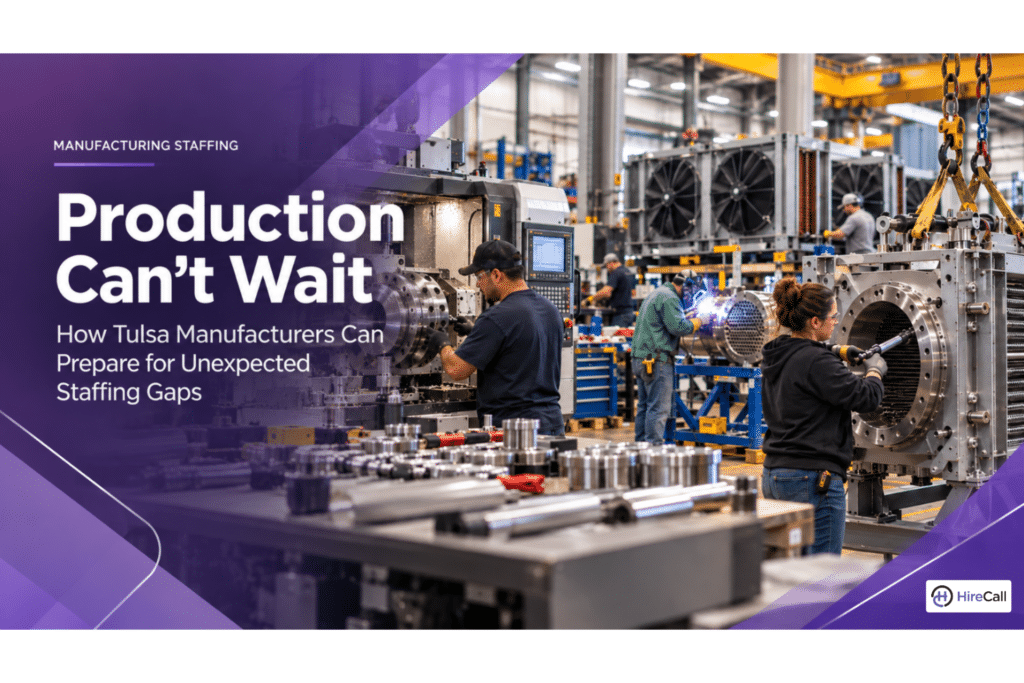
Production Can’t Wait: How Tulsa Manufacturers Can Prepare for Unexpected Staffing Gaps
A CNC operator calls out unexpectedly. An experienced welder resigns. A new production order requires additional employees sooner than anticipated.
For manufacturing employers, unexpected staffing gaps can quickly affect production schedules, equipment utilization, and the workload of existing employees. When an open position requires specialized industrial experience, finding the right replacement can be particularly challenging.
Across Tulsa, Catoosa, and Claremore, manufacturers depend on skilled professionals to operate equipment, maintain quality standards, and keep production moving.
With physical offices in Tulsa and Catoosa, HireCall supports manufacturing employers in both communities, as well as Claremore and surrounding Oklahoma markets. Our recruiting team understands the importance of matching candidates’ technical experience with each facility’s equipment, production requirements, and hiring needs.
Preparing for staffing gaps before they happen can help employers respond more effectively when workforce needs change.
Need skilled manufacturing talent? Connect with HireCall’s recruiting team to discuss your hiring needs.
Why Staffing Gaps Create Challenges for Manufacturing Operations
Not every manufacturing vacancy has the same impact.
When an operation loses an employee with specialized technical experience, the challenge isn’t simply finding someone available to cover a shift. It’s identifying someone who understands the equipment, materials, and processes involved.
For example, replacing an experienced CNC machinist or pipe welder may require a different recruiting approach than filling a general production position.
Manufacturing employers commonly experience staffing gaps because of:
-
Unexpected employee absences or resignations.
-
Increased production demands or new customer orders.
-
Difficulty finding candidates with specific machining, welding, or fabrication experience.
-
Experienced employees retiring or leaving with specialized knowledge.
-
Limited internal resources to recruit for technical positions.
-
New projects that require additional skilled industrial professionals.
These challenges can place additional pressure on supervisors and existing employees, potentially leading to overtime, production adjustments, and delays.
While short-term adjustments may help, manufacturers benefit from having a more structured workforce plan.
Build a Staffing Gap Plan Before You Need One
A practical workforce contingency plan starts with understanding which positions are essential to maintaining production.
For manufacturers in Tulsa, Catoosa, and Claremore, this means identifying the skilled industrial roles that would be most difficult to replace unexpectedly.
Step 1: Identify Your Most Critical Manufacturing Positions
Start by reviewing the positions that directly affect your production processes.
Depending on your operation, these may include:
-
CNC machinists and machine operators.
-
Welders and pipe welders.
-
Fitters and metal fabrication professionals.
-
Press brake operators.
-
Industrial mechanics.
-
Mechanical assemblers and assembly technicians.
Consider which positions require specialized training, equipment knowledge, or experience that cannot easily be replaced internally.
This assessment helps determine which vacancies would require immediate recruiting attention.
Step 2: Document the Technical Requirements of Each Position
One of the most common challenges in skilled industrial hiring is assuming that candidates with similar job titles have similar qualifications.
A CNC operator experienced with one type of machinery may not have the same skills as someone operating different equipment. Similarly, welding positions can involve different materials, techniques, and technical requirements.
Before recruiting begins, document the qualifications that matter most.
These may include:
-
Experience operating specific industrial equipment.
-
Familiarity with manufacturing materials and processes.
-
Ability to interpret blueprints or technical drawings.
-
Relevant certifications or technical training when required.
-
Experience with machine setup, tooling, or adjustments.
-
Knowledge of workplace safety and quality-control procedures.
-
Shift availability and previous experience in similar manufacturing environments.
Clear requirements help recruiters evaluate candidates based on relevant experience rather than broad job titles.
Looking for experienced CNC operators, welders, or machinists? Explore HireCall’s industrial staffing services to learn how we support skilled manufacturing hiring.
Step 3: Cross-Train Employees Where Appropriate
Internal cross-training can provide additional flexibility when an unexpected absence occurs.
Review which employees already have experience with related equipment or production processes and identify opportunities for additional training.
However, employees should only operate machinery or perform specialized tasks when they have the appropriate training, qualifications, and authorization.
Cross-training may help provide temporary coverage, but it doesn’t eliminate the need to recruit for positions requiring specialized experience.
Step 4: Establish a Clear Response Plan
Not every staffing gap requires the same response.
A short-term absence may be manageable through qualified internal employees. A permanent vacancy for a skilled machinist may require a more extensive recruiting process.
Manufacturers should establish clear expectations for:
-
When internal coverage is appropriate.
-
Which vacancies require immediate recruiting support.
-
Who is responsible for communicating staffing needs.
-
What information must be provided when requesting candidates.
-
How hiring priorities will be evaluated when multiple positions are open.
Having these decisions established in advance can help reduce confusion when workforce needs change unexpectedly.
Step 5: Establish a Recruiting Relationship Before a Vacancy Occurs
When a skilled industrial position becomes vacant, employers may need to identify candidates with very specific technical backgrounds.
Working with a recruiting partner who understands your operation, equipment, and hiring expectations can make those conversations more productive.
HireCall supports industrial and manufacturing recruiting needs across Tulsa, Catoosa, Claremore, and surrounding communities.
By discussing your workforce requirements before an urgent vacancy occurs, your team can establish a clearer understanding of the qualifications and staffing solutions that may be appropriate.
Want to prepare for your next manufacturing hire? Contact HireCall’s Oklahoma recruiting team to discuss your workforce priorities.
Temporary, Temp-to-Hire, or Direct Hire: Choosing the Right Staffing Solution
Manufacturing staffing needs vary depending on the position, production requirements, and anticipated duration of employment.
Choosing the right staffing approach can help employers address immediate workforce needs while considering longer-term hiring priorities.
Temporary Staffing
Temporary staffing can help employers address short-term workforce gaps, production increases, or project-based needs.
For specialized industrial positions, candidate availability and technical qualifications remain important considerations.
Temp-to-Hire Staffing
Temp-to-hire staffing allows employers to evaluate an employee’s technical abilities, work habits, and fit within their manufacturing environment before making a permanent hiring decision.
This approach may be useful when employers anticipate a long-term need but want additional time to assess the working relationship.
Direct Hire Recruiting
Direct hire recruiting may be appropriate for permanent positions requiring specialized manufacturing experience.
For example, an employer looking for an experienced CNC machinist, industrial mechanic, or welder may benefit from a recruiting process focused on specific technical qualifications and long-term fit.
The most appropriate solution depends on the responsibilities of the position, the urgency of the hiring need, and the availability of qualified candidates.
Not sure which staffing option fits your operation? Request Talent from HireCall and discuss your requirements with our recruiting team.
Skilled Industrial Staffing Support for Manufacturing Operations
When a manufacturing facility loses an experienced CNC operator, welder, machinist, or mechanical assembler, finding a replacement requires more than identifying an available candidate.
Each position involves specific technical skills, equipment knowledge, and production responsibilities.
An employer looking for a press brake operator, for example, may need someone with experience working with particular machinery, interpreting technical drawings, and meeting precise manufacturing specifications.
Similarly, a company recruiting a mechanical assembler may require candidates who understand industrial tools, equipment components, and technical assembly processes.
HireCall supports skilled industrial and manufacturing recruiting needs throughout Tulsa, Catoosa, Claremore, and surrounding communities.
Our recruiting approach focuses on understanding each employer’s equipment, technical requirements, and production expectations before identifying potential candidates.
Local Manufacturing Recruiting in Tulsa, Catoosa, and Claremore
Tulsa, Oklahoma
HireCall has a physical office in Tulsa and supports manufacturing employers seeking skilled industrial professionals, including machine operators, machinists, welders, and mechanical assembly talent.
Catoosa, Oklahoma
With a physical office in Catoosa and established relationships with industrial employers, HireCall provides local recruiting support for manufacturing and skilled trades positions.
Claremore, Oklahoma
HireCall actively serves manufacturing employers in Claremore, helping businesses address skilled industrial staffing needs through its regional recruiting team. Although HireCall does not have a physical office in Claremore, the community remains an important service market.
Need manufacturing recruiting support in your area? Connect with HireCall’s Tulsa or Catoosa team to discuss your hiring needs.
Common Mistakes to Avoid When a Manufacturing Staffing Gap Occurs
Even employers with established hiring processes can experience challenges when an important position becomes vacant unexpectedly.
Avoiding a few common mistakes can help improve the hiring process.
Waiting Too Long to Request Recruiting Support
Recruiting for specialized manufacturing positions may require additional time to identify candidates with relevant technical experience.
Maintaining relationships with recruiting resources before a vacancy occurs can help employers prepare for unexpected hiring needs.
Using Job Descriptions That Are Too Broad
A general job description for a machine operator or welder may attract candidates whose experience doesn’t align with the equipment or processes involved.
Clearly identifying technical requirements can help make recruiting efforts more targeted.
Overlooking Technical Qualifications
Manufacturing employers should evaluate candidates based on the actual responsibilities of the position.
Relevant experience, equipment familiarity, technical skills, and required certifications should be considered when applicable.
Skipping Important Onboarding Steps
Even experienced industrial professionals need to understand a new facility’s equipment, safety expectations, production procedures, and reporting structure.
A structured onboarding process can help new employees become familiar with the work environment and expectations.
Relying Too Heavily on Existing Employees
Overtime and redistributed responsibilities may provide temporary relief, but prolonged staffing shortages can increase pressure on existing employees.
A proactive recruiting strategy can help employers plan for changing workforce requirements.
Already facing a skilled industrial staffing shortage? Tell HireCall about your open positions and connect with our recruiting team.
Frequently Asked Questions About Manufacturing Staffing Gaps
How early should Oklahoma manufacturers prepare for unexpected staffing gaps?
-
Manufacturers should begin preparing before vacancies occur. Identifying critical positions, documenting technical requirements, reviewing internal coverage options, and establishing recruiting relationships can help employers respond more efficiently when staffing needs change.
What types of skilled manufacturing positions can HireCall help employers fill?
-
HireCall supports recruiting for skilled industrial and manufacturing positions, including CNC machine operators, machinists, welders, pipe welders, fitters, press brake operators, mechanical assemblers, and other technical manufacturing roles.
Recruiting needs and candidate availability vary depending on the position and employer requirements.
Does HireCall provide manufacturing staffing in Tulsa, Catoosa, and Claremore?
-
Yes. HireCall has physical offices in Tulsa and Catoosa and actively provides recruiting support to manufacturing employers in Claremore and surrounding Oklahoma communities.
Should manufacturers use temporary staffing or direct hire recruiting?
-
The right option depends on the position and workforce need. Temporary staffing may be suitable for short-term requirements, while direct hire recruiting may be more appropriate for permanent positions requiring specialized technical experience. Temp-to-hire staffing offers another option when employers want to evaluate long-term fit.
How can employers help new industrial employees work safely and effectively?
-
Employers should provide appropriate onboarding, equipment-specific training when needed, clear safety instructions, and access to experienced supervisors. New employees should understand the facility’s procedures and be qualified and authorized before performing specialized work.
What information should employers provide when requesting skilled industrial talent?
-
Employers should share the job responsibilities, equipment involved, required experience, shift schedule, work location, anticipated start date, and any necessary certifications or technical qualifications.
-
These details help recruiters understand the position and identify candidates whose experience aligns with the work.
How can manufacturers reduce the impact of unexpected employee departures?
-
Maintaining updated job requirements, identifying qualified internal backup employees, developing recruiting relationships, and reviewing workforce needs regularly can help employers respond when experienced employees leave.
A More Prepared Workforce Starts With a Plan
Unexpected staffing gaps can affect production schedules, increase pressure on existing employees, and create challenges for manufacturing operations.
By identifying critical positions, documenting technical requirements, and establishing recruiting resources before vacancies occur, employers can respond more effectively when workforce needs change.
With physical offices in Tulsa and Catoosa, HireCall provides recruiting support to manufacturers throughout these communities, as well as Claremore and surrounding Oklahoma markets.
Whether you need experienced CNC operators, machinists, welders, mechanical assemblers, or other skilled industrial professionals, our team is ready to discuss your workforce requirements.
Ready to prepare for your next manufacturing hire?
Request Talent from HireCall or contact our Oklahoma recruiting team to get started.